
Time synchronization solutions for the energy sector

Time servers and clocks for power utilities
Time synchronization plays a key role in the energy sector. Accurate time management enables to optimise energy production, distribution and consumption.
Accurate synchronization is paramount for ensuring the reliability, stability and efficiency of electricity networks. Energy management systems rely on accurate timestamping for coordinating operations, detecting and isolating breakdowns, as well as optimising the use of resources.
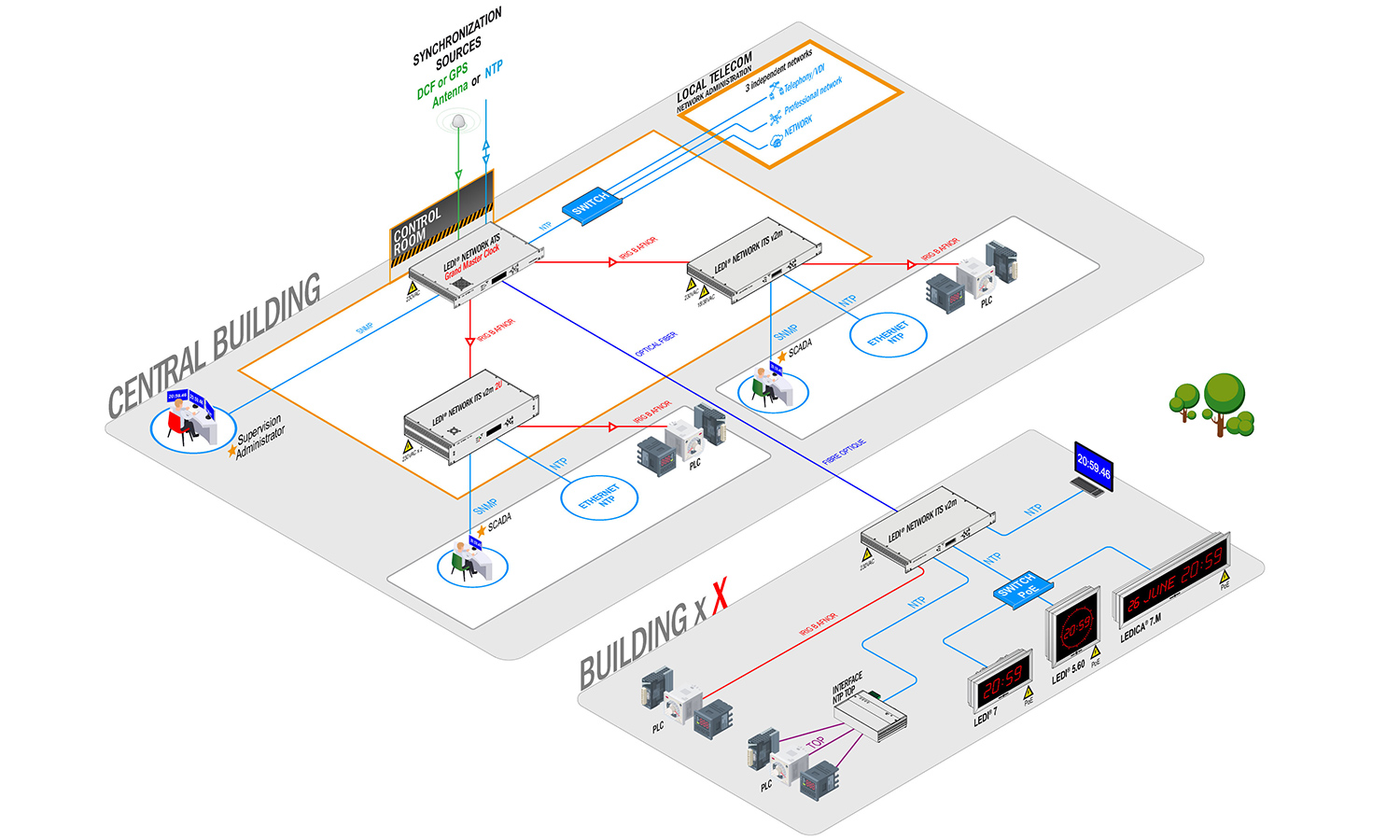
How does time synchronization work in the energy sector and how important is it?
Time synchronization relies on advanced technologies ensuring accurate and reliable time distribution across all energy systems.
Time servers are key devices in the synchronization network. Indeed, they receive the exact time from reliable sources, such as GPS satellites, and they distribute it to other devices on the network. These time servers ensure that all operations in the energy sector are carried out with an accurate time, thus reducing the risks of inefficiencies or breakdowns.
Once time servers receive the accurate time, they are able to distribute it to all devices and synchronized clocks. This distribution is usually carried out via network protocols such as the NTP or the PTP, guaranteeing time transmission with a high level of accuracy.
Clocks play a key role by displaying the accurate time in the different areas of the energy infrastructure. Whether in power plants, distribution stations or control centres, these clocks ensure that all operators and systems operate in full coordination. A set of well-synchronized clocks reduces human errors and enhances operational efficiency.
By making sure that all devices and systems operate on the same time base, time synchronization helps reduce risks of breakdowns and malfunctions. Events can be traced accurately, thus making it easier to quickly identify and solve problems.
Time synchronization and distribution optimises the allocation of energy resources. Operators can adjust productions and distributions in real time, leading to more efficient energy use and significant savings.
Accurate and reliable synchronization is also paramount for network security. It allows anomalies and intrusions to be quickly detected, thus ensuring enhanced protection against cyberattacks and other threats.
Time servers for reliable synchronization in power plants
Time servers play a key role in power plants by achieving accurate and reliable time synchronization.
They can receive exact timestamps from time sources, and distribute them to all systems and equipment of the power plant in a reliable and secure way.
This synchronization enables all operations (from energy production to its distribution) to be carried out with an accuracy down to nanoseconds.
This helps to minimise all risks, to optimise operational processes and ensure a timely response. In the case of anomalies, time servers make it easy to quickly and accurately detect events, thus enhancing the security and efficiency of power plants.
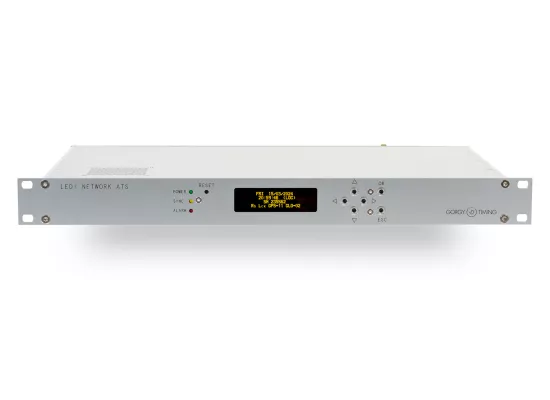
LEDI® NETWORK ATS
Highly accurate, secure time server with its internal base capable of providing a stable time signal even in holdover mode over long periods.
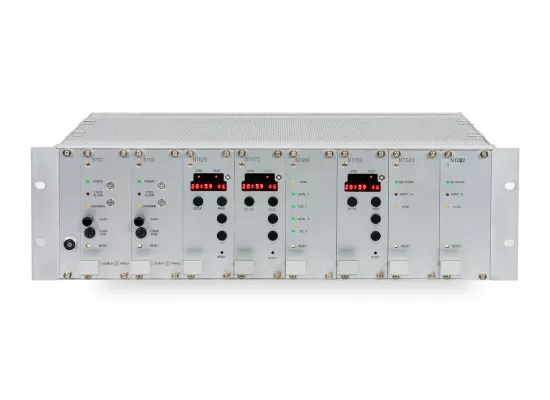
RADIO TIMING 4000
Time centre equipped with an intermodule bus, allowing for the redundancy of all outputs for a high level of security.
Analogue and digital clocks for the energy sector
Accurate time distribution is essential in the energy sector, in different operational environments. Clocks are synchronized via time servers using protocols such as the NTP or the PTP, thus ensuring time consistency across all the energy infrastructure.
With their traditional and intuitive display, analogue clocks offer quick and easy time reading, making them suitable for areas where immediate visualisation is required.
In multiple application fields, the quality of the HANDI®range of analogue clocks is a reference in terms of accuracy, readability and robustness.

HANDI® 620
Single-sided round analogue clock with a 60-cm diameter, for outdoor use.


Digital clocks provide increased accuracy with additional features such as the display of the date and seconds.
LEDI®
They enable operators and technicians to work with the same time reference, thus reducing errors and enhancing the efficiency and the coordination of operations.
Whether in control rooms or in the field, synchronized clocks are essential tools for maintaining the reliability and precision in the energy sector.
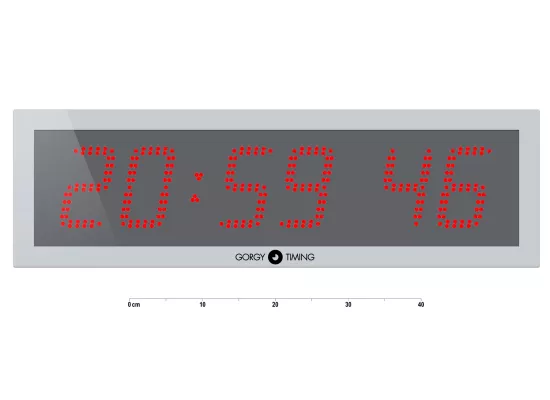
LEDI® 12.S OUTDOOR
Professional tricolor LED clock for indoor or outdoor use, single-sided, displaying hours, minutes and seconds.
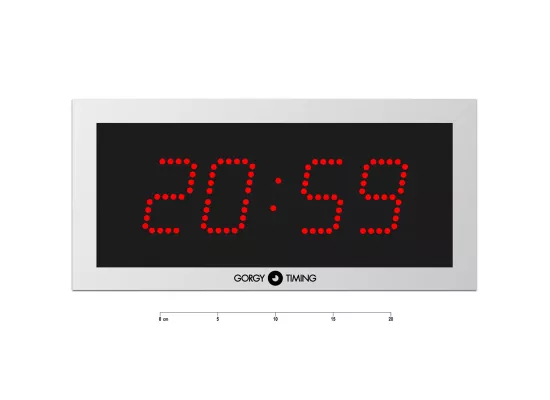
LEDI® 7
Professional tricolor LED clock, for indoor, single-sided, displaying hours and minutes.
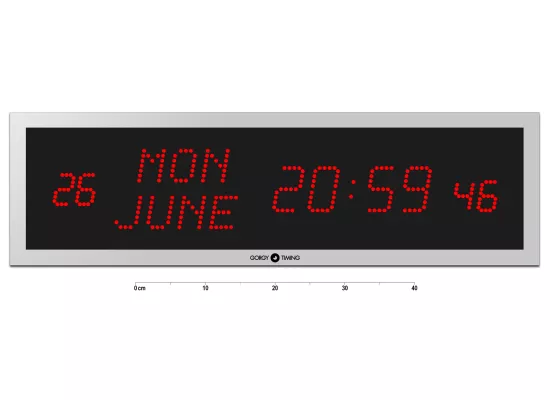
LEDICA® ALPHA 7.M.S
Professional tricolor LED calendar clock, for indoor use, single-sided, displaying date (alphanumeric), hours, minutes and seconds.